MCP Context
MCP Context ranks MCP servers by their context token footprint. This footprint comes from tool descriptions and input schemas that the agent sees before calling a tool.
Open Monitor > Tokens, then select MCP Context or View all from the MCP Context card.
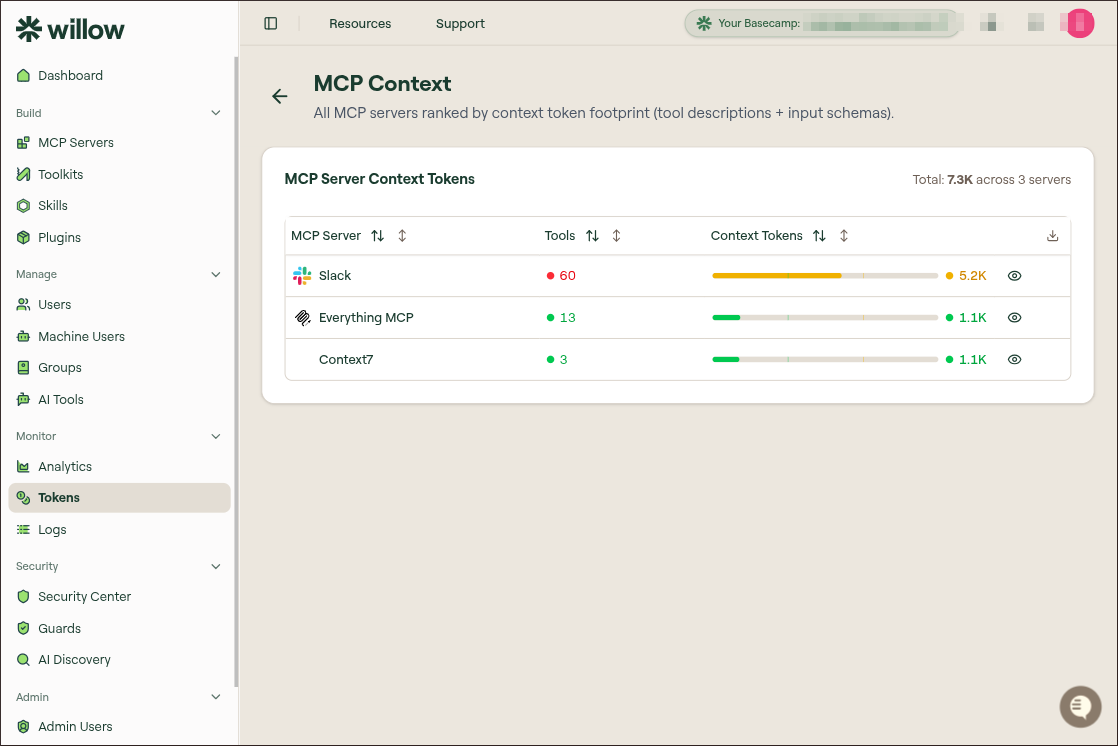
Table columns
| Column | Description |
|---|---|
| MCP Server | The server whose tools contribute context. |
| Tools | Number of tools exposed by the server. |
| Context Tokens | Estimated context footprint from tool descriptions and input schemas. |
| View | Opens a detail drawer with individual tool descriptions and schema sizes. |
| Download | Exports the table. |
High tool count is not always a problem by itself. The best candidates for optimization are servers with both many tools and a large context-token bar.
Inspect a server
Select the view icon on a server row to open the detail drawer. The drawer lists individual tools with description-token and schema-token estimates.
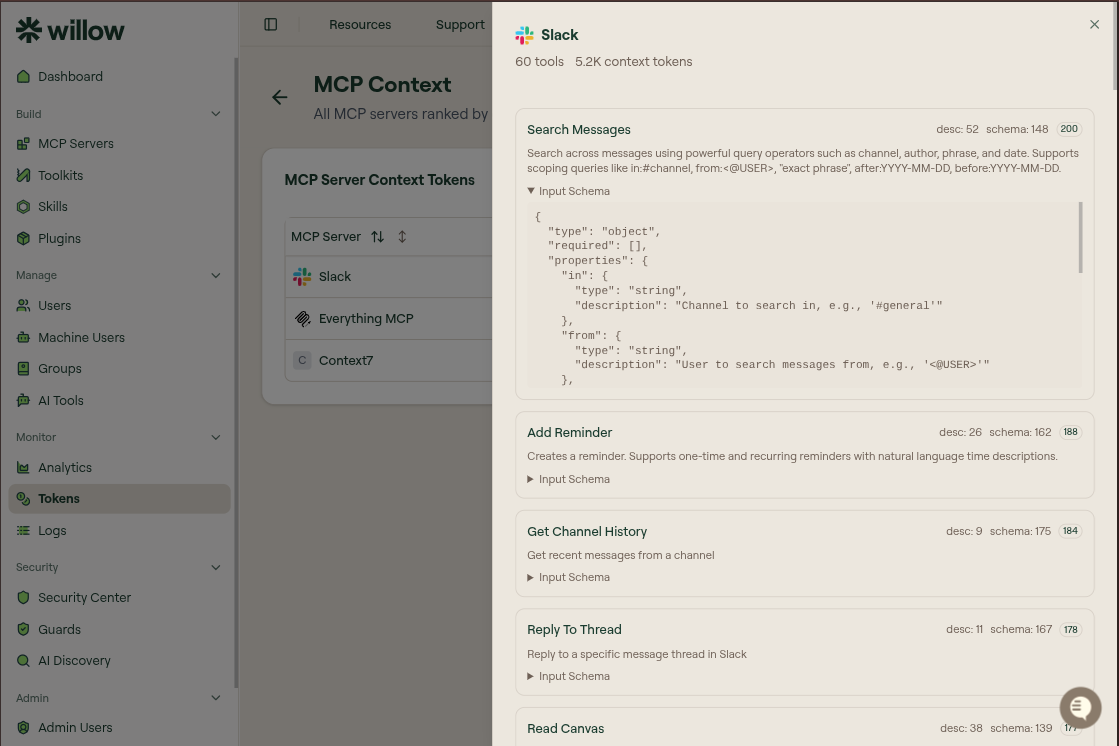
Use this drawer to identify tools with long descriptions, large schemas, or tools that should not be exposed to every workflow.
Reduce MCP context
To reduce MCP context:
- Identify servers with the largest context footprint.
- Review which tools users actually need for a workflow.
- Create a focused toolkit with only those tools.
- Assign the toolkit to the relevant users or agents.
- Disable or avoid exposing unnecessary high-context tools where possible.
This is especially useful for broad connectors such as Slack, GitHub, or internal platform MCP servers that expose many unrelated tools.