AI Tools
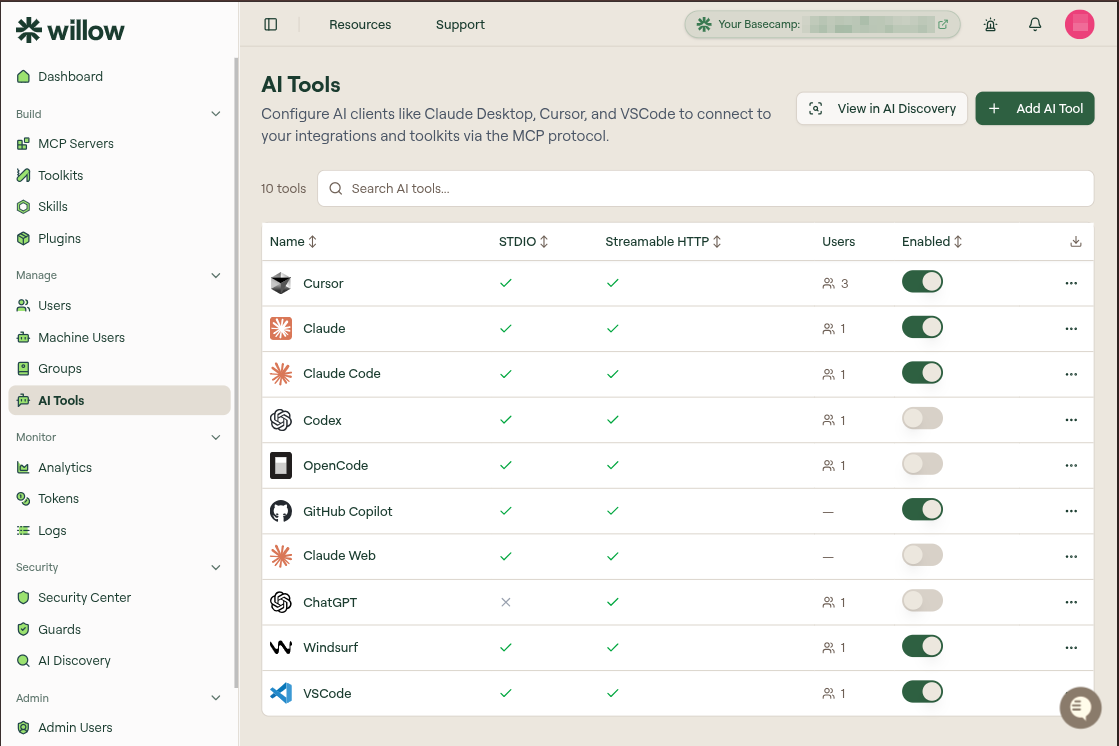
Configure AI clients like Claude Desktop, Cursor, and VSCode to connect to your integrations and toolkits via the MCP protocol.
Find it under Manage → AI Tools (/manage/ai-agents).
The dashboard's adoption strip and the page's route both use the older term AI Agents. They refer to the same objects.
The AI Tools list
The table shows every AI tool Willow knows about, with a count above it (for example, 10 tools) and a search box.
| Column | Description |
|---|---|
| Name | The tool's display name and icon. Sortable. |
| STDIO | Whether the tool supports a stdio connection. Sortable. |
| Streamable HTTP | Whether the tool supports a streamable HTTP connection. Sortable. |
| Users | How many of your users have connected with this tool. |
| Enabled | Toggle that controls whether users may connect with this tool. Sortable. |
A download icon in the header row exports the list as CSV.
Most tools support both transports. ChatGPT is the exception: it supports Streamable HTTP only.
Willow ships with ten tools configured: Cursor, Claude, Claude Code, Codex, OpenCode, GitHub Copilot, Claude Web, ChatGPT, Windsurf, and VSCode.
View in AI Discovery
View in AI Discovery opens AI Discovery, which surfaces AI tools running on your devices, including ones you have not configured here.
Add an AI tool
- Select + Add AI Tool.
- Enter a Name and a Slug.
- Select Create.
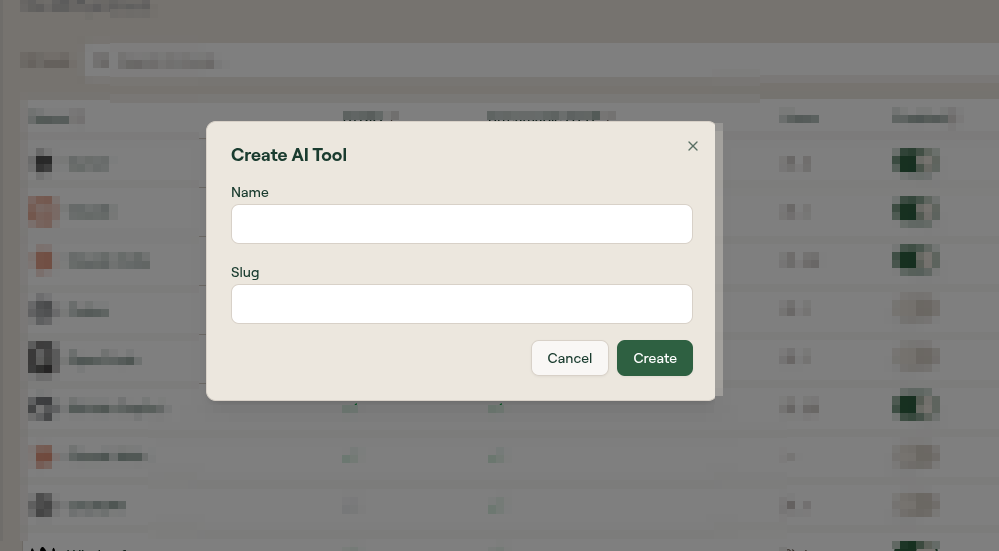
The slug cannot be changed after creation.
Edit an AI tool
Open a tool's row menu and select Edit, or select the row itself, to open its configuration page. Built-in tools offer only Edit in the row menu; they cannot be deleted.
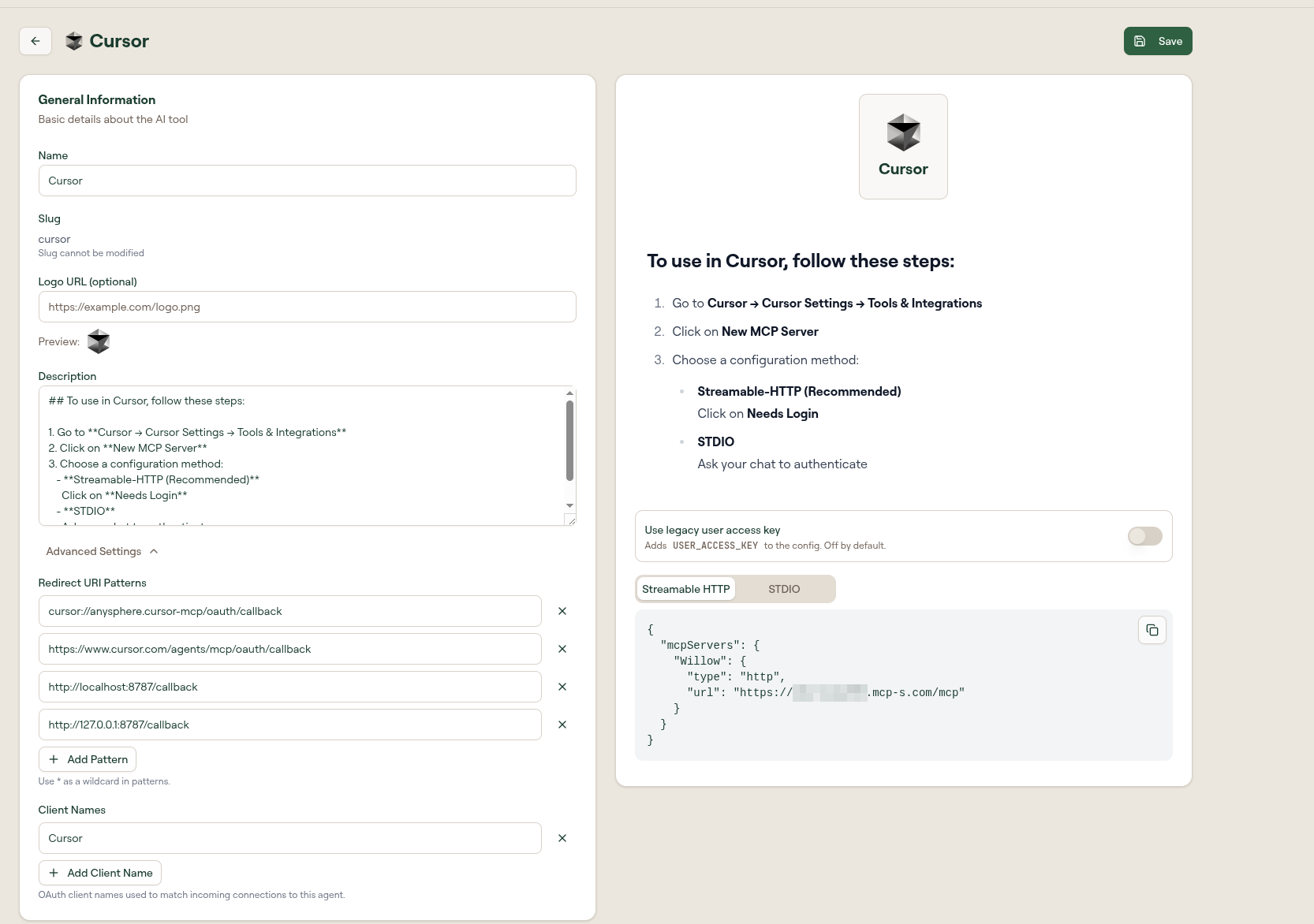
Select Save in the top right to persist your changes.
General Information
| Field | Description |
|---|---|
| Name | The tool's display name. |
| Slug | Read-only. Slugs cannot be modified after creation. |
| Logo URL | Optional image URL. A preview renders beneath the field. |
| Description | Markdown. This is what renders as the setup instructions in the right-hand panel. |
Advanced Settings
| Field | Description |
|---|---|
| Redirect URI Patterns | OAuth redirect URIs the tool may use. Select Add Pattern for more. Use * as a wildcard. |
| Client Names | OAuth client names used to match incoming connections to this tool. Select Add Client Name for more. |
Together these let Willow recognize an incoming OAuth connection and attribute it to the right tool.
Configuration
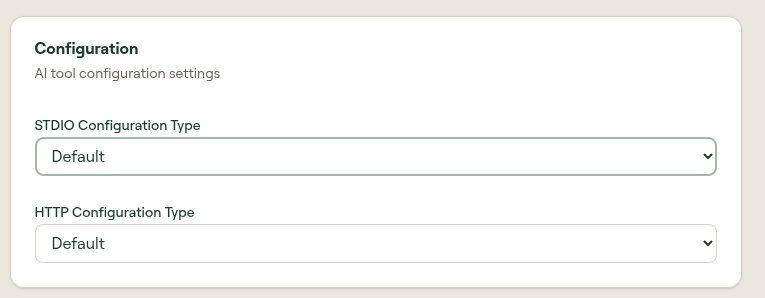
The Configuration card controls which connection methods Willow offers for this tool.
| Setting | Options |
|---|---|
| STDIO Configuration Type | Disabled, Default, Custom |
| HTTP Configuration Type | Disabled, Default, Custom |
Choose Disabled to hide that transport, Default to use Willow's generated configuration, or Custom to supply your own.
The setup preview
The right-hand panel previews exactly what an end user sees when they connect this tool. It renders the Description as numbered steps, then shows a copyable configuration block under Streamable HTTP and STDIO tabs.
For example, the Streamable HTTP block points at your gateway:
{
  "mcpServers": {
    "Willow": {
      "type": "http",
      "url": "https://your-org.mcp-s.com/mcp"
    }
  }
}
Use legacy user access key
A Use legacy user access key toggle sits above the preview. When on, Willow adds USER_ACCESS_KEY to the generated configuration. It is off by default; leave it off unless a client cannot complete the OAuth flow.